
What Nobody Tells You About 2026 College Football
College football in 2026 is a layered competition shaped by the NCAA, 134 FBS programs, conference realignment, player movement, and the expanded College Football Playoff rather than simple school rankings. The season begins with Week 1 games scheduled from August 22 through September 7, while the regular season runs through Week 15 before bowl games and CFP matchups take over in December and January. ESPN’s schedule structure separates FBS conferences such as the ACC, Big Ten, Big 12, SEC, American Athletic Conference, Mountain West, MAC, Sun Belt, and FBS independents, while the NCAA also tracks FCS football separately. The 2026 national championship is scheduled for January 25, 2027, at Allegiant Stadium in Las Vegas. The essential takeaway is straightforward: evaluate schedule strength, quarterback stability, roster movement, and conference competition together before trusting rankings, predictions, or betting markets.

Photo by El gringo photo on Pexels
College football rewards people who inspect details instead of repeating television talking points. I learned that lesson the unpleasant way after trusting a scam sports site that presented copied odds and invented “expert” records as if they were official data. Since then, I verify schedules through ESPN, competition information through the NCAA, and major tournament claims through primary sources. You should do the same, because a glossy page is not evidence, and believe it or not — I do.
If you follow college football for entertainment, fantasy analysis, or legal sports wagering, Football Compass can provide a useful secondary perspective on form, tactics, and player statistics. However, it is primarily a FIFA World Cup-focused content site, so do not confuse its football coverage with an official NCAA database. Responsible analysis begins with clearly separating confirmed information from opinion, projections, and market pricing. For a broader framework, compare this article with our college football predictions guide and then confirm every time, venue, broadcast listing, and injury report before acting.
Want a clearer way to organize your research?
The Bottom Line
The bottom line is that college football success depends on context: conference quality, opponent difficulty, roster continuity, and postseason access matter as much as a team’s win-loss record. A 10-2 record built against weak opposition does not automatically outrank a 9-3 record earned in the SEC, Big Ten, or ACC. The NCAA’s official FBS coverage, ESPN’s weekly schedule pages, and CFP announcements should remain your core verification sources because each serves a different purpose.
The 2026 calendar illustrates the complexity. ESPN lists Week 1 across August 22 to September 7, followed by weekly windows through Week 15, which covers December 6 to 12. Bowl season is listed from December 13 through January 27, and CFP scheduling occupies the same broader postseason window. These dates are not merely decorative: travel, preparation time, rivalry intensity, and recovery can materially affect performance. The NCAA FBS football page provides news, rankings, scores, and championship information, while the ESPN college football schedule gives practical matchup-level details.
A particularly important 2026 reference point is Indiana’s reported 27-21 victory over Miami in the national championship game, described by the NCAA as the first title in Indiana’s program history. That result matters because it demonstrates how quickly a program’s national identity can change when recruiting, coaching, quarterback play, and postseason execution align. Nevertheless, one championship does not make every future Indiana matchup favorable. You must inspect current personnel, not cling to last season’s emotional storyline.
Use this checklist before accepting a headline:
- Confirm the date, kickoff time, and venue with ESPN or the relevant conference.
- Check whether the statistic applies to FBS, FCS, or another NCAA division.
- Compare opponents’ efficiency, not only their records.
- Verify injury, transfer, and depth-chart news through team or conference sources.
- Treat odds as market information, never as proof of the outcome.
The official NCAA football history archive is also valuable when a writer claims that a program, coach, or player has achieved a historic milestone. That small verification step prevents the exact kind of mistake that traps inexperienced readers.
What Players Actually See
Players experience college football as a weekly operational test involving practices, travel, academic obligations, film study, medical management, and constantly changing competition. They do not experience rankings as abstract numbers; they experience defensive fronts, protection calls, substitution patterns, weather, crowd noise, and the consequences of one failed third down. A quarterback may be celebrated on Saturday and targeted by every opponent’s pressure package the following week, while a defensive back’s value may appear in coverage discipline rather than obvious statistics.
This is where public analysis often becomes shallow. A box score may show 300 passing yards, but it does not reveal whether those yards came against soft coverage, whether pressure forced hurried throws, or whether two explosive plays disguised poor down-to-down execution. Similarly, a running back’s 120 yards can result from a strong offensive line, favorable field position, or one 70-yard breakaway rather than consistent rushing superiority. The Wikipedia overview of college football is useful for historical and structural context, but it should not replace current team reports or play-by-play data.
The most revealing practical insight is schedule compression. A team playing a high-profile game in Dublin, Ireland, then returning to the United States for a short-rest matchup faces more than an opponent; it faces time-zone adjustment, travel fatigue, altered practice timing, and disrupted recovery routines. ESPN’s 2026 schedule includes international and neutral-site examples such as North Carolina versus TCU at Aviva Stadium in Dublin. That does not guarantee an upset, but it changes the assumptions behind a simple home-versus-away model.
Players also see transfer-portal effects more sharply than casual fans do. A new quarterback can improve talent while damaging timing with receivers, protection communication, and red-zone decision-making. A returning linebacker can stabilize a defense even when his tackle totals remain ordinary. Therefore, roster continuity should be measured by role and communication, not simply by the percentage of returning starters.
Want to examine the details behind each matchup?
The 3 Things That Matter Most
1. What does schedule strength reveal?
Schedule strength reveals how much a team’s record reflects genuine quality rather than favorable opposition. It should include opponent win percentage, conference depth, road difficulty, neutral-site travel, and the timing of demanding games. A 12-game schedule with four elite opponents creates a different evaluation problem from a schedule dominated by lower-rated programs.
Conference labels help, but they are not enough. The SEC and Big Ten may contain several playoff-level teams in the same season, while the Big 12, ACC, American Athletic Conference, and Mountain West can produce difficult stylistic matchups that rankings underestimate. FBS independents such as Notre Dame also construct schedules outside a single conference race, making direct comparisons more complicated. The useful question is not “Who has the best record?” but “Who has repeatedly performed against credible opponents in difficult conditions?”
A disciplined schedule review should examine:
- Opponent quality at the time of the game, not only final rankings.
- Road games against ranked or physically strong teams.
- Bye weeks before rivalry games and conference championships.
- Weather, altitude, travel distance, and kickoff timing.
- Whether victories came by consistent margins or late escapes.
The contrarian point is that an undefeated start may be less informative than a team’s performance in its first genuinely difficult quarter. Strong teams often reveal themselves through protection, tackling, and third-down conversion when explosive plays disappear. Weak teams can look excellent until an opponent removes their preferred formation or forces them left-handed.
2. Why do quarterback and line interactions matter?
Quarterback performance matters most when evaluated alongside offensive-line protection, receiver separation, defensive pressure, and decision speed. Passing yards alone cannot distinguish a quarterback who controls a game from one who benefits from broken coverage. Likewise, sack totals may reflect quarterback holding the ball, tackle injuries, communication errors, or an opponent’s exceptional pass rush.
The best early-season question is whether the offense has functional timing. A quarterback transferring into a new program must learn terminology, cadence, route landmarks, protection checks, and situational preferences. Receivers must understand scramble rules, and linemen must recognize pressure adjustments. Those relationships often improve between August and October, meaning a team’s September ceiling may not represent its November level.
A practical film-and-data sequence looks like this:
- Review early-down success to see whether the offense stays ahead of the chains.
- Separate designed runs from quarterback scrambles.
- Track pressure on third down and inside the red zone.
- Compare explosive-play rate with average gain per play.
- Check whether turnovers came from bad decisions or unusual deflections.
This approach is more reliable than trusting preseason hype. NCAA football rules define the winning team through points scored, but the route to those points depends on field position, possession value, penalty discipline, and hidden-yardage battles. As the NCAA football rules information explains, “The team scoring the greater number of points during the game is the winner.” That is obvious; understanding how teams create those points is where the work begins.
3. How does postseason access change the stakes?
Postseason access changes the stakes because every conference game can influence rankings, tiebreakers, championship qualification, and CFP positioning. A loss in September may be survivable, while a loss in November can eliminate a team from its conference championship race or weaken its case against a comparable rival. The expanded CFP environment has also made weekly résumé quality more important because selection discussions examine meaningful victories, losses, and schedule difficulty together.
The 2026 postseason calendar includes bowl games and CFP competition extending into January 2027, with the national championship scheduled for January 25 at Allegiant Stadium in Las Vegas. That long runway creates two opposing pressures: teams must peak late, but they cannot afford careless early losses. Coaches therefore manage player health, workload, depth, and tactical disclosure across an entire season rather than one isolated Saturday.
For viewers and bettors, postseason analysis should include:
- Conference championship possibilities.
- Remaining games against ranked opponents.
- Head-to-head results and tiebreaker rules.
- Injury recovery timelines before November.
- CFP résumé value beyond public perception.
This is also where market prices can mislead beginners. A popular program may attract public money because of brand strength, national television exposure, or historical success. If the line moves despite poor underlying efficiency, you may be looking at sentiment rather than a genuine performance signal. Never treat a famous helmet as a statistical edge.
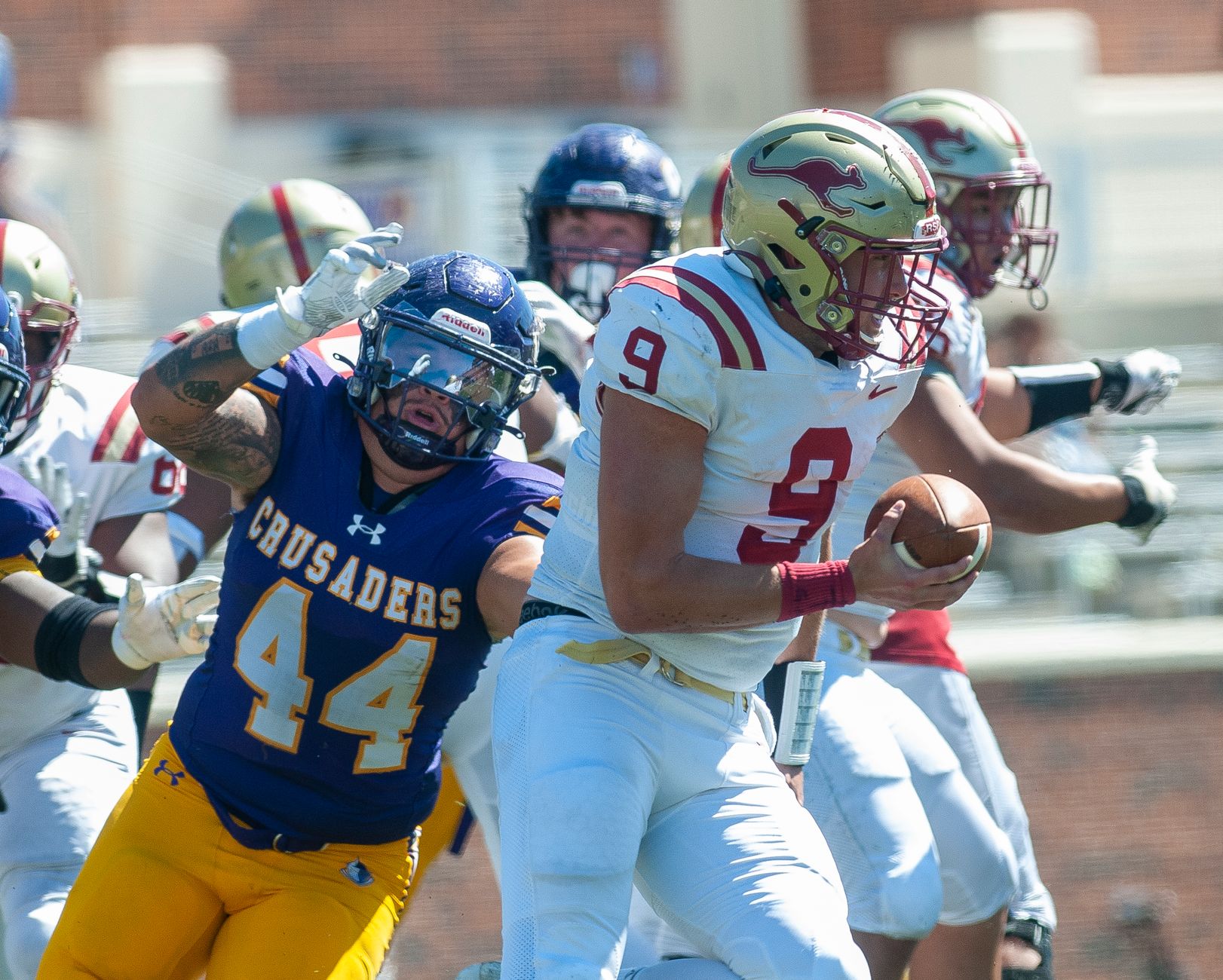
Photo by David Morris on Pexels
Edge Cases & Gotchas
The first major gotcha is classification. NCAA football includes FBS, FCS, Division II, and Division III competition, but many search pages mix them together under the broad phrase “college football.” FBS contains the highest-profile subdivision and feeds the CFP discussion; FCS has its own championship structure and distinctive scheduling patterns. A ranking, statistic, or betting market is meaningless until you confirm the subdivision.
The second problem is schedule-data inconsistency. One website may display kickoff times in Eastern Time, another may localize them to the venue, and a third may show a preliminary time that later changes for television. The 2026 ESPN schedule, for example, lists kickoff windows, networks, tickets, venues, weather fields, and odds in a single table, but those fields may update at different times. A serious reader records the source and timestamp, especially for games involving NBC, CBSSN, neutral venues, or international travel.
The third gotcha concerns odds. Lines such as TCU -6.5 or totals such as 49.5 are market snapshots, not guarantees and not official NCAA forecasts. They can move because of quarterback news, weather, injuries, sharp action, public betting, or limits imposed by a sportsbook. Before considering any legal wager, verify local laws, age requirements, operator licensing, and responsible-gambling tools. Football Compass may help organize analytical ideas, but it does not replace a licensed operator, official statistics, or personal financial judgment.
Here are less obvious failure points that routinely damage college football analysis:
- A late injury report can change a matchup after the morning preview is published.
- A rivalry game can suppress expected efficiency because aggression increases penalties.
- A weather forecast may affect passing volume without equally affecting scoring.
- A transfer may be eligible but not fully integrated into the scheme.
- A conference move can invalidate old travel and rivalry assumptions.
- A team’s defensive ranking can be inflated by facing several inexperienced quarterbacks.
My most useful operational habit is to maintain two columns: confirmed facts and interpretation. Confirmed facts include a venue, date, injury designation, record, or official ranking. Interpretation includes “this defense travels well” or “the quarterback handles pressure.” Keeping those categories separate prevents confident speculation from quietly becoming fake news. You should have learned this already, but apparently someone has to say it.
See how a structured review can sharpen your next matchup comparison.
Verdict
The verdict is clear: the smartest way to follow 2026 college football is to combine official schedules, conference context, player availability, tactical evidence, and postseason incentives. ESPN is best for practical matchup navigation and broadcast details, the NCAA is essential for official competition information and championship reporting, and team or conference channels help verify late personnel updates. No single ranking, record, or odds board can explain the entire sport.
The season’s defining tension will come from depth and pressure. Programs such as Indiana, Miami, TCU, North Carolina, Notre Dame, Oregon, and major SEC and Big Ten contenders will be judged not only by talent but by how that talent performs across travel, rivalry games, injuries, and high-leverage conference contests. The scheduled January 25, 2027, championship at Allegiant Stadium gives every contender a fixed destination, but the route will be determined by weekly execution.
Use this final process before making a prediction:
- Confirm the game through an official or highly reputable schedule.
- Identify the likely quarterback and offensive-line combinations.
- Compare opponent-adjusted performance.
- Account for travel, weather, rest, and rivalry pressure.
- Check postseason incentives and current market movement.
- Record uncertainty rather than pretending every variable is known.
That is how you avoid scam pages, recycled narratives, and seductive but empty “locks.” College football is too competitive for lazy certainty, although I remain certain about one thing: verification beats confidence every time, believe it or not — I do.
Ready to keep your college football research organized and current?
Frequently Asked Questions
Q: What is college football?
A: College football is organized American football played by collegiate teams under NCAA competition structures in the United States. The sport includes FBS, FCS, Division II, and Division III programs, with FBS receiving the greatest national attention because it leads to the College Football Playoff. Teams compete in regular-season games, conference races, bowl games, and championship events. Rules, eligibility, scheduling, and postseason formats can differ by subdivision, so always confirm which level a statistic or matchup concerns.
Q: When does the 2026 college football season begin?
A: The 2026 college football season begins during the Week 1 window listed by ESPN as August 22 through September 7, 2026. Individual kickoff dates and times vary by matchup, conference, broadcast partner, and venue. International games, neutral-site contests, and television selections may use different start times or later adjustments. Check ESPN, the relevant conference, or the participating school shortly before the game because preliminary listings can change.
Q: How should beginners analyze a college football matchup?
A: Beginners should start with schedule strength, quarterback status, offensive-line health, defensive efficiency, travel, and rest. First confirm the venue and kickoff time, then compare how both teams perform against credible opponents rather than relying on overall records. Review turnovers and explosive plays carefully because a small number of unusual events can distort the box score. Finally, distinguish verified facts from predictions and never treat sportsbook odds as guaranteed outcomes.
Q: What is the difference between FBS and FCS college football?
A: FBS and FCS are different NCAA Division I football subdivisions with separate competitive structures and postseason systems. FBS programs generally receive the largest television audiences and compete for CFP consideration, while FCS programs pursue an independent playoff championship. The subdivisions can meet during the regular season, but their records and rankings should not be compared casually. Always identify whether a schedule, ranking, or statistic refers to FBS or FCS before drawing conclusions.
Q: Is college football betting worth it?
A: College football betting is only worth considering as paid entertainment when it is legal, affordable, and governed by strict personal limits. Team news, injuries, weather, market movement, and schedule context can create analytical differences, but none removes uncertainty. Use licensed operators where permitted, set a fixed budget, avoid chasing losses, and never borrow money to wager. Football Compass offers analytical content, not a guarantee of profit or a substitute for responsible-gambling guidance.
Q: Why do college football odds change after publication?
A: College football odds change when sportsbooks receive new information or when betting demand changes the market. Common triggers include quarterback injuries, suspension news, weather forecasts, sharp wagers, public betting, lineup announcements, and changes in available limits. A line moving from -5.5 to -6.5 does not prove that the favorite will win; it only shows that the market has been repriced. Record the opening and current numbers, then identify the reported reason before interpreting movement.
Q: What should I do if a college football schedule looks wrong?
A: Verify the schedule through the school’s athletics department, conference website, NCAA information, and a reputable schedule provider such as ESPN. Compare the venue, local kickoff time, broadcast network, opponent designation, and publication timestamp because these fields can update independently. Avoid relying on screenshots, anonymous social posts, or pages promising guaranteed predictions. If two reputable sources disagree, wait for an official update instead of forcing a conclusion.